 EN


Heavy Duty Steel Shipping Container First Floor Leveller No Weld Adjustable Leveling Pad For Stacked Containers
Product Name |
Shipping Container First Floor Leveller |
Material |
Steel |
Finish |
Hot Dip Galvanized |
Size |
150MM X 150MM x 600MM |
Perfect Height to Cut Utility Pole |
200mm |
Weight |
4.92 kg |
Load Capacity |
10 Tons |
Application |
Precision Height Adjustment for Stacked Shipping Containers |
Components Included |
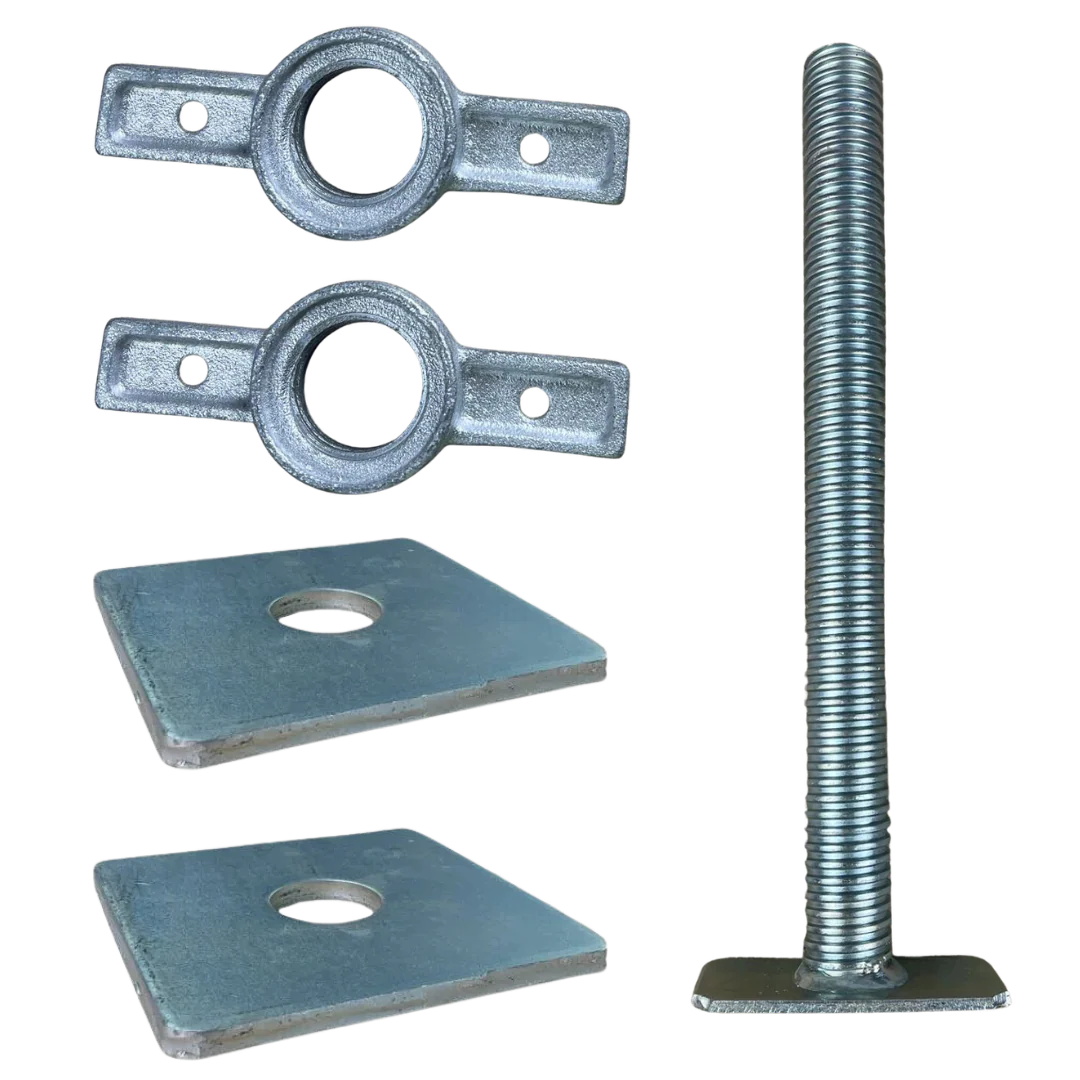
1× Spindle Rod, 2× Winged Nuts, 2× 10mm Plates |
- Description
- Detailed Photos
- Application
- Packaging & Shipping
- Related Products
Description
Hot-Dip Galvanized Anti-Corrosion Treatment:Made of high-strength carbon steel with hot galvanized finish. It resists rust in coastal, mining and outdoor working conditions.
High Load Capacity:Made of thick cast steel with reinforced flat plates. Rated load reaches 10 tons. It can firmly support heavy-duty containers.
Threaded Height Adjustment for Precise Leveling:Coarse trapezoidal thread design. Rotate the wing nuts to lift or lower the support freely. Easily correct height deviation and keep the whole arch frame perfectly horizontal.
Tool-Free Hand Tightening:Dual wing nut design allows manual tightening without any wrenches or power tools.
Simple Installation: Fits standard ISO container corner castings for fast deployment with no welding or modifications required.
Whether you're building a container home, a site office, or a two-story modular structure, the First Floor Leveller is the essential tool to streamline setup and ensure level stacking from the ground up.
Detailed Photos


Application
The First Floor Leveller is a robust, precision-engineered solution designed to level shipping containers stacked on top of each other. Perfect for modular container builds, elevated container offices, or multi-level container structures, this device ensures safety, stability, and ease during alignment and installation.


Packaging & Shipping
★We could supply all kinds of container spare parts, and also accept Mix Order loaded into one container for shipping.

Company Advantages
We are proud to have a professional and experienced independent R&D team dedicated to product innovation. Our engineers specialize in structural design, material optimization, and new product development.With strong R&D capabilities, we offer OEM/ODM customization services to meet your specific requirements. Whether you need modified sizes, special materials, custom surface treatments, or entirely new structures, our team can provide comprehensive technical support from design to mass production.
Choose us for reliable quality, technical expertise, and the flexibility to create exactly what you need.

Exhibition

FAQ
Q1: How many First Floor Levellers are required for one stacked shipping container?
A: A standard shipping container setup requires 4 units (one placed at each top ISO corner casting of the bottom container). This ensures that the upper container's weight is evenly distributed and perfectly balanced across all four corners.
Q2: What is the load capacity of each leveller?
A: Each unit is rated for an estimated load capacity of up to 10 tonnes (10,000 kg). With 4 units installed, the combined theoretical support exceeds 40 tonnes, which easily handles fully fitted two-story modular container homes and site offices.
Q3: Does the installation require welding or drilling on the container?
A: No welding or drilling is required. The base plate and utility pole seat securely into standard ISO 1161 corner casting apertures. It preserves container integrity, causes zero surface damage, and allows full disassembly for temporary or relocatable structures.
Q4: Can the threaded utility pole be cut to different heights?
A: Yes. The leveller is typically supplied with a 400mm or 600mm utility pole. For optimal stability and minimal clearance in modular building projects, contractors can easily cut the pole down to around 200mm (20cm) depending on project requirements.
Q5: How does the dual-nut mechanism prevent loosening under wind or vibration?
A: The system utilizes a dual winged nut locking mechanism. The lower nut adjusts the elevation of the upper washer plate, while the upper nut acts as a heavy-duty counter-locking jam nut. Once tightened against the plate, it prevents mechanical slippage caused by ground settling or gust forces.
Q6: What surface protection is applied for outdoor exposure?
A: All components—including the threaded spindle, cast steel winged nuts, and 10mm thick washer plates—are treated with hot-dip galvanizing (or electro-galvanizing) to deliver superior corrosion resistance against rain, UV, salt spray, and extreme weather.